New information travels fast, which poses the question: How do Americans stay informed with accurate news?
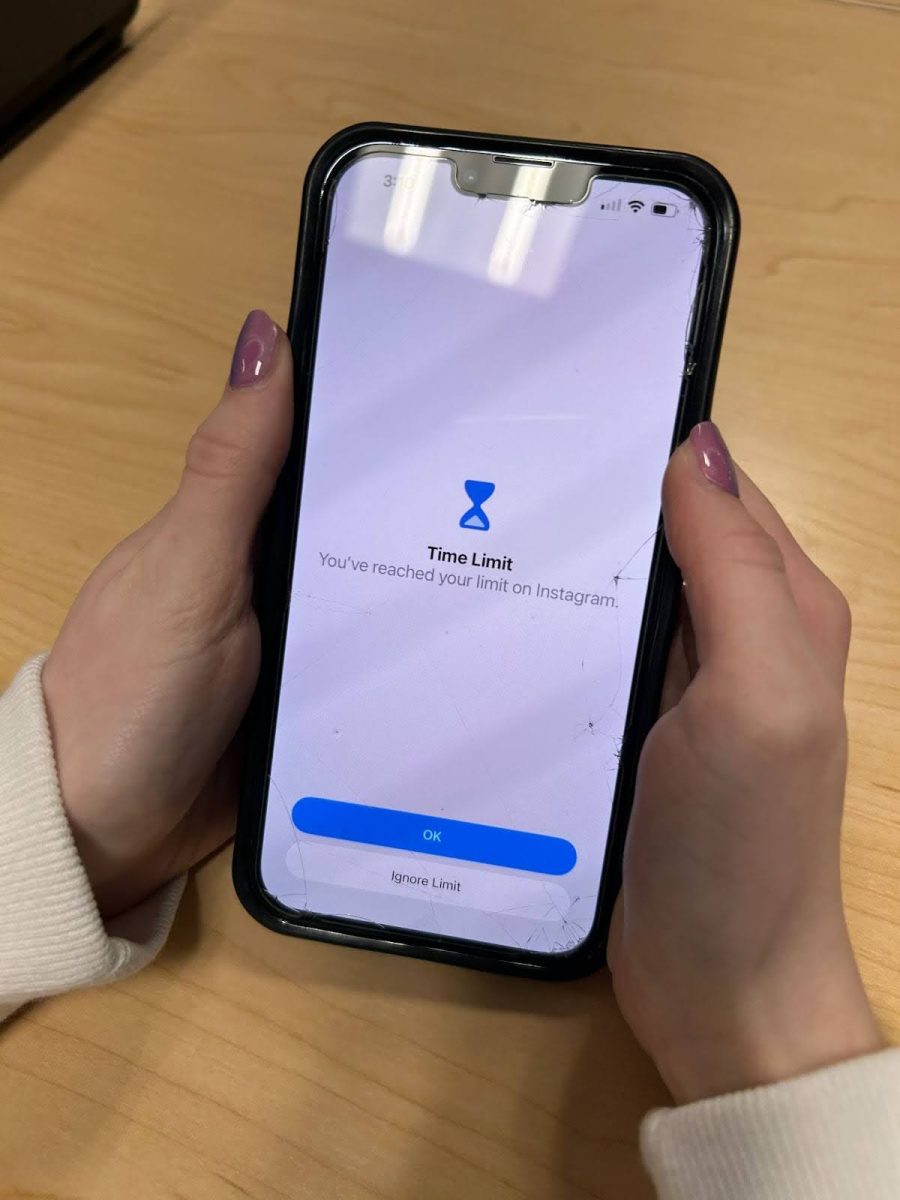
In 2025, 53% of Americans said that, over time, they consistently got their news from social media journalism, one of the least objective news sources based on content filtration.
Brent Johnson, Ph.D., is the Associate Professor Director of Undergraduate Studies at the University of Iowa.
“I think the evidence shows platforms are not necessarily neutral,” Johnson said. “They do prioritize certain things versus others, and sometimes that can be as simple as whatever a preprogrammed algorithm [says] should be followed. If lots of people are engaging with some content online, the algorithm is going to say more of that.”
Ariel Kolder is a freshman majoring in journalism at the University of Iowa.
“Ethically, we want to make money and we want people to read our [work], especially on social media, but also, how do we as journalists adhere to the truth as our duty as journalists?” Kolder said.
According to a study done with Democrats, Republicans and Independents, media confidence has reached 28%, the lowest ever recorded in the United States. Among those ages 30-49, six percent of Republicans, 42% of Democrats and 24% of Independents believe news outlets can be trusted to a fair extent.
Americans ages 65 and older seem to hold more trust in the media. 17% of Republicans, 69% of Democrats and 42% of Independents were recorded for believing news is mostly reliable.
“We’re no longer in the glory days where everyone would turn on Walter Cronkite and the whole country would believe everything he said because they trusted him. They called him the most trusted man in America, but we’re well past that,” Johnson said.
During the 1960s and 1970s, news began to travel to the public through radio and television. The American literary movement caused a new genre of journalism to rise that mixed real reporting with fabricated information. Some enjoyed these new compelling stories, but journalists also faced backlash when they failed to adequately alert the public to events occurring in the Vietnam War and the later context surrounding the Watergate scandal in the early ‘70s.
“There’s a lot more aspects of journalism that need to be checked right now. In the past, there were certain things that [journalists] just didn’t even have to worry about. I also think less people paid attention since we were a lot more locally focused,” Kolder said.
While online journalism in the 21st century enables news to be updated more frequently, it also gives journalists the resources to put together data-heavy articles. This enables journalists to complete in-depth investigations and be a better watchdog for the public.
“[News] allows us to make informed decisions about who we want in power and what policies we want made. Ultimately, the government should be working for the people, so we need to know what’s happening so we can make informed decisions,” Kolder said.
The press continues to be a platform that holds the government and those in positions of power responsible for their actions.
“I think that most of the time we’ve been able to rely on a system that checks itself eventually, and so hopefully we’ll continue to see that happen,” Kolder said.