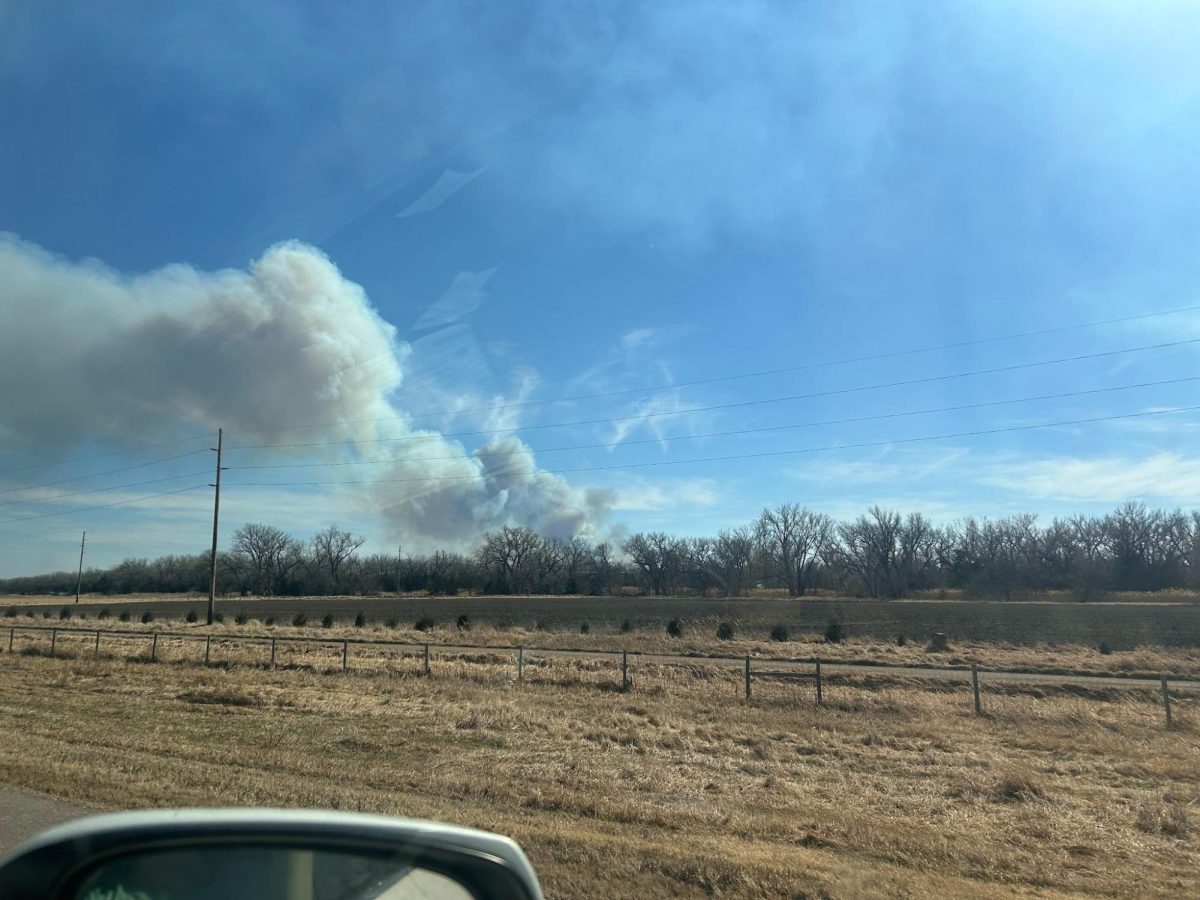
In just the first four months of 2026, 22,658 wildfires have been reported as of April 24, burning nearly two million acres, already surpassing the 10-year average of acres burned. Scientists have found that wildfires have increased in frequency, intensity and size in recent years.
Nearly 90% of wildfires are attributed to anthropogenic (human) activities, especially farm equipment in Iowa. As the climate changes, fire-prone conditions occur more frequently: higher temperatures, decreased rainfall and increased wind gusts.
Bill Brenny is a certified wildfire fighter through the U.S. Fish and Wildlife Service and the Pheasants Forever Organization.
“With lower humidity, the volatility of the fuel increases, so wildfires burn faster and hotter,” Brenny said. “The combination of both the higher winds than when I was a kid, the increasing overall average global temperatures and the lower humidity creates a perfect breeding place for wildfires to roam uncontrollably.”
Jenifer Secrist is an AP Environmental Science and Biology teacher at Liberty High School.
“We have changed our atmosphere so greatly, and we trap in so much heat, that we have changed the climate so much that we have prolonged the drought in certain regions, and that’s where we’re seeing these wildfires,” Secrist said. “Not because there are more people making bonfires or throwing cigarette butts out. It’s that the conditions are such that you can’t do those things anymore because everything around you could just go up in flames.”
The Midwest isn’t known for its wildfires; however, they have increased in recent years. Although wildfires can be a natural part of the Midwest’s ecosystem, by reducing invasive species and supporting wildlife health in prairies, states like Iowa have lost most of their native land. This is due to the replacement with farmland that utilizes monocropping. Monocropping already detrimentally impacts the environment, and is worsened when wildfires occur, leading to compounding problems.
“[Wildfires] are only creating further destruction of what we have already destroyed,” Secrist said.
Despite the increase in fires in the Midwest, the main concern is not the fires occurring there; instead, it is the byproducts of fires from other parts of the country.
“We don’t have enough prairies to have that as an issue. Our prairies are all cornfields and bean fields, and those aren’t going up in flames as much,” Secrist said. “I see wildfires are an issue in Iowa because of the byproduct of the fires [in other parts of the country]. We share the same atmosphere.”
Byproducts can travel long distances, adversely affecting humans, the environment and the economy over a vast area.
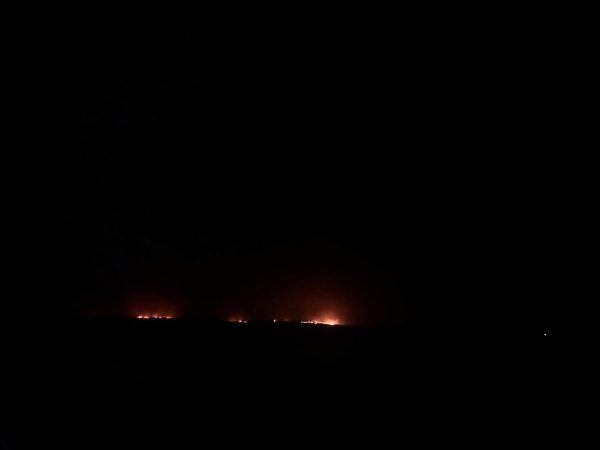
Wildfires cause serious health issues in a variety of ways. There are risks of injury or death occurring from coming in contact with the flames themselves, but the byproducts tend to have a more severe effect.
Wildfires produce smoke and release a high amount of particulate matter (PM), specifically PM 2.5, into the atmosphere. Due to the particles from PM 2.5 being very fine, they can penetrate the lungs and bloodstream. This leads to serious health concerns, including premature deaths, cognitive impairment and worsening of preexisting lung, heart, nervous system, skin, gut, kidney, eyes, nose and liver diseases. Additionally, heat stroke risks increase, cardiovascular health worsens and cognitive functions are impacted. The byproducts of fires can affect everyone, but it affects the youth and older populations the most.
The line for health impacts doesn’t stop at respiratory illness and heat strokes; it continues to death. According to a recently published study from the journal Science Advances, an average of 24,100 deaths per year occurred as a result of long-term exposure to particulate matter from wildfires across 2006 to 2020.
Wildfires are extremely costly in terms of trying to combat them, rebuilding destroyed infrastructure and the medical expenses. In areas that are prone to wildfires, people are building houses without regard to the environment, which leads to infrastructure destruction.
“You’re going to have people who maybe can’t do their job. You’re going to have an increase in healthcare issues. People are potentially going to need to stay inside more, which means everybody who works outside has to run the risk of having it be a health concern or stop their work. That’s going to have a big economic impact,” Secrist said.
Not only are humans directly affected, but the surrounding environment deteriorates due to raging flames. Wildfires can impact the environment by causing habitat loss and decreasing biodiversity.
Habitat loss leaves animals having to relocate or die, which decreases biodiversity. If a forest gets burned down, root structures are loosened, leading to higher erosion, carbon sequestration is lost and animals are left without homes. Additionally, photosynthesis decreases, which decreases primary productivity, the rate at which producers create organic matter.
There are ways that Iowans can protect themselves from these conditions, including filtration systems, staying inside when the air quality is bad and masks to prevent particulate matter from entering the body.
On a nationwide scale, the current U.S. administration is lifting environmental regulations, which can fuel the wildfire problem.
“You’ve got increasing fuels, increasing storm conditions and then you cut back in the firefighting capabilities and the research that goes with it. So when one of these big wildfires starts, they’re not going to have the research, the manpower and the equipment in order to adequately control them. It’s going to be a perfect storm for a destructive wildfire,” Brenny said.
The outlook for the future is uncertain, raising concerns for future generations.
“[The administration] is destroying native environments and they’re making things much, much worse for our environment, with the encouragement of oil usage and fossil fuels. They’re going backwards, and my concern is not what is happening in my lifetime, but much more so in the generations following me. Our generation is not leaving a very good outlook for the young generation.”
Secrist explains that people do, in fact, impact the climate, as displayed in the greenhouse gas effect.
The real problem isn’t the wildfires, but climate change as a whole that is increasing their intensity, frequency and size. The increasing number of wildfires is just one small effect of climate change, but it is leaving devastating impacts on humans.
“If we want to solve the problem, we have to go to the problem. We can’t just put a Band-Aid on the forest fire. Because the forest fire is not a cause. It is the effect of the climate changing so dramatically, and then you have a spark from a tire, a car or a power line, and everything goes up in flames,” Secrist said.