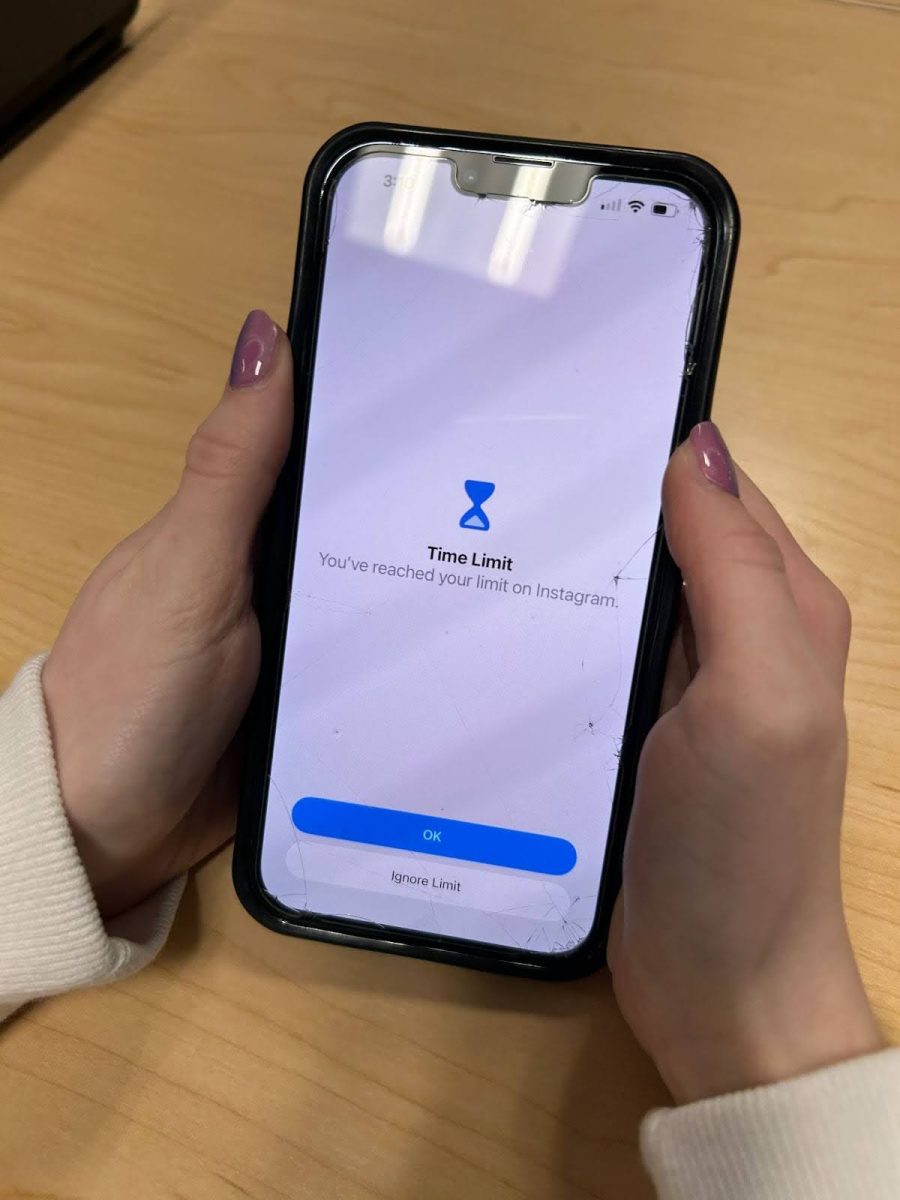
Phone restrictions are very common among teens, but the severity varies depending on the child. Many teens depend on their phones for communication with their peers and taking that away can make them feel disconnected. Parents and teens have different views on restrictions and how they are affecting their lives.
Teens can set restrictions on their own, but they can also be set by their parents. Parents have to be careful when putting restrictions on their children’s phones and think about how it will affect them. Parents may think that by setting limits, they are keeping their child safe, but it can also come across that they don’t have trust in their child.
Ayla Trolliet, 9, has multiple restrictions on her phone from her parents. She gets only two hours on all social media apps combined and her phone turns off completely after ten p.m.
“As I’ve gotten older, even though I didn’t do anything wrong when I was younger, the restrictions have just gotten a lot worse because they think now that I’m older, I’m going to be more sneaky. So I feel the trust is not really there,” Trolliet said.
As teens get older they want more freedom and for their parents to trust that they will make good decisions. When parents put restrictions on their teens’ phones, even if it is for their safety, teens may see it as a lack of trust.
Former teacher and parent of two, Rachel DeMaris, has gotten many different views on phone restrictions and how they affect teens. When making these restrictions, parents should take into account their child and not just what others are doing.
“Don’t just go with the popular opinion; actually talk to your kid,” DeMaris said. It starts with having an open, honest, relationship with your kids so that you can talk about whatever comes up. You can understand from them how kids actually use their phones, not just what people tell you what they do with their phones.”
When parents have an open relationship with their kids and are able to express why they have set certain restrictions, teens will feel more trusted and want to share more with their parents. While teens may see no positive impacts from phone restrictions, they can help with their level of focus and confidence.
“Some reasons I’ve had for creating restrictions or heard of are to protect kids’ mental health so that they aren’t comparing and contrasting with what they see on social media,” DeMaris said. “Something I also experienced as a teacher was that students that had unfettered access to phones were often much more tired, particularly in the morning, since they were playing on their phones all night and not necessarily getting enough sleep.”
While it seems to parents that phones take up most teens’ lives, not all are addicted and use their phones in the same way. Many teens primarily use their phones as a vital source of communication with friends and when that gets cut off, it can be frustrating.
“If I get in an argument with someone or I’m in the middle of talking about something important and I can’t contact them anymore, that puts a lot of stress on me,” Trolliet said. “When I’m under that stress I don’t want to do other work and if I could just finish what I was doing instead of it getting cut off I would have a better chance at focusing on something else.”
There are many pros and cons to phone restrictions and there is not one right way to go about it. It is best to have a trusting relationship and make restrictions based on current situations and what will have the best benefits.