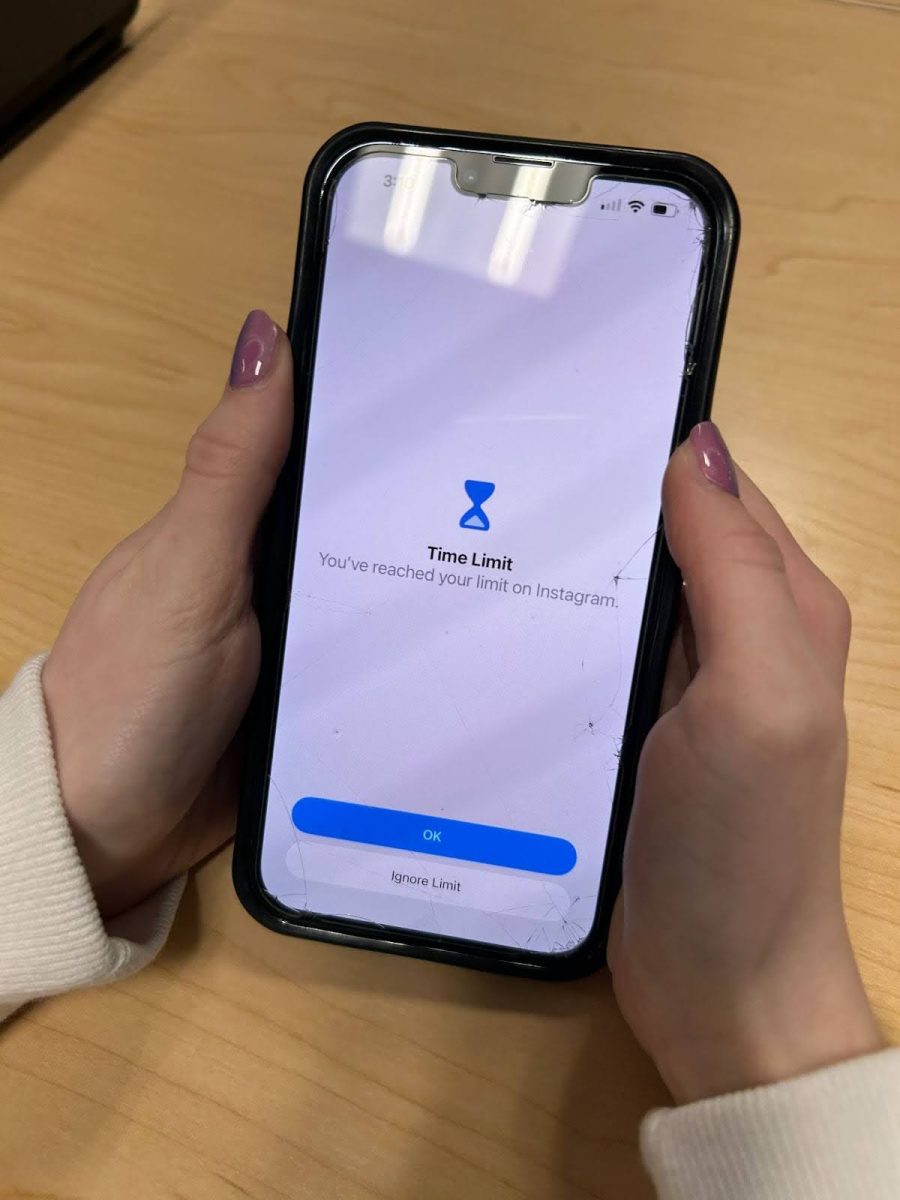
For many teenagers, the first place they hear about major events is not a television broadcast or newspaper headline—it’s their social media feed. As traditional news consumption declines among young audiences, social media has become the primary source of news for many teens. 51% of teens (14-18) get their news from social media platforms, surpassing other sources such as TV news and news websites.
Platforms such as TikTok, Instagram and X allow news to spread rapidly and reach teens where they already spend much of their time. The same features that make social media accessible may raise concerns about accuracy, bias and how easily opinions can be reinforced after repeated exposure online.
Malaya McConnell (she/her), 10, believes that social media plays a significant role in shaping what teens see and believe.
“Especially social media, your algorithm is based on what you watch,” McConnell said.
Algorithms are designed to show users content similar to what they have previously interacted with, which can narrow exposure to opposing viewpoints and reinforce existing beliefs.
“If you only listen to news from a certain lens, or from a certain point of view, oftentimes it’s hard for you to acknowledge the other side,” McConnell said. “And then you just don’t really ever see any information put out by the other side.”
McConnell seeks credibility by assessing whether a source presents multiple perspectives.
“I think when it’s pretty clear when [news sources] are giving both sides of the story, or when they’re looking for different opinions,” McConnell said. “That’s when I trust it more.”
Tjae Thames (he/him), 11, also questions how effective social media is as a main source of news. Thames emphasizes the importance of paying attention to stories that extend beyond personal interests.
“National [news] is important because it affects a broader range of people and not just me,” Thames said.
McConnell acknowledges that social media can also play a positive role in keeping teens informed, especially those who may not actively seek out traditional news.
“In a general sense, social media is helping teenagers see more of the new stuff,” McConnell said. “I know a lot of teenagers wouldn’t look at the news otherwise. I think social media is helping them stay informed.”
However, exposure does not always mean understanding. McConnell mentions that many students rely heavily on their families for information rather than forming their own opinions.
“A lot of the students at this school, it’s pretty clear that they just get their information from their parents,” McConnell said.
Depending solely on one source—even family—can limit critical thinking.
“Sometimes people’s parents just feed them untrue information,” McConnell said. “And they’re just not aware of it, because that’s just what their parents tell them is right. And then they become really close-minded to other points of view.”
To avoid this pattern, McConnell actively researches topics independently and compares perspectives.
The constant stream of online news can also affect teens’ mental well-being. Recently, McConnell has reduced her engagement with political coverage.
“Lately, I tried to limit how much of the new policies by President Trump I see,” McConnell said. “It stresses me out a lot, and sometimes seeing all that just really makes me concerned about the future.”
Although McConnell believes that social media is useful to the youth, she also challenges the idea that social media is a reliable source for news.
“[Social media] distracts me more than helps me stay informed,” McConnell said. “Usually, it’s not really important news stories.”
McConnell explains that much of the news teens see on social media comes from individuals sharing opinions rather than verified sources.
“A lot of the news you see on social media is more through people, not news sources where they check it and do detailed research,” McConnell said. “So usually it’s a little bit less trustworthy.”
Thames agrees that social media often pulls attention away from meaningful coverage.
“[Social media] keeps me distracted from what is actually happening in the world,” Thames said.
As more teens turn to social media for news, the challenge may not be whether students are informed, but how they choose to be informed. In an era shaped by algorithms and constant updates, staying knowledgeable requires more than scrolling—it requires questioning, verifying and thinking critically.