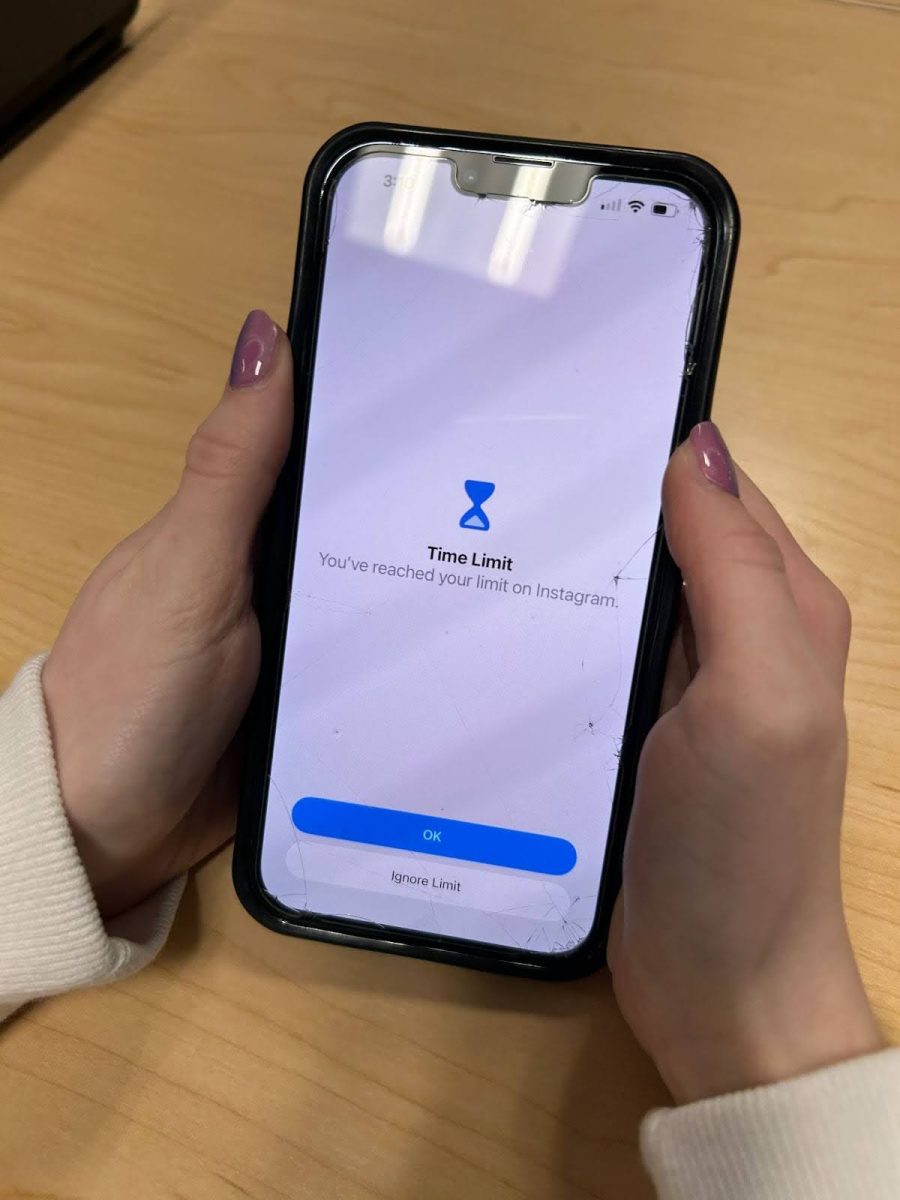
Students around Liberty are experiencing the effects of social media on their mental and academic health.
Social media platforms seem to be distracting students from homework, exercise, work and family activities. A study focusing on teens in the United States showed that spending just three hours a day using social media leads to a higher risk of mental health concerns.
Annabelle Pedersen (she/her), 11, explains how using social media platforms impacts her personally.
“For me, social media has many major downfalls: fostering insecurity, creating distraction or escape from mental health issues and spreading misinformation and toxic ideals, to name a few. But what I dislike the most about social media is the concept that everyone knows what everyone else is doing,” Pedersen said.
Academic performances have decreased over the years, causing districts to create phone bans and ultimately regulations against whether or not students should be allowed to have their phones during school.
Throughout the years, students and staff have started to see the Iowa City Community School District (ICCSD) become stricter about the usage of phones in school.
At home, many students find themselves checking their phones while doing homework, which seems to break concentration and productivity. Over time, this leads to incomplete assignments, lower grades and increased stress as deadlines approach.
“I struggle to put my phone down and definitely spend too much time scrolling mindlessly and wasting away precious minutes,” Pedersen said. “I compare others’ clothes, lives, bodies, relationships and appearances to my own. Social media has really either enhanced my sadn ess or helped me escape from it.”
However, the effects of social media on students are not just limited to the classroom; it can also take a toll on a student’s mental health.
Around 93% of U.S teens aged 13-17 use social media, and spend approximately four hours a day on their devices. Children and adults who tend to spend more than three hours a day on social media face double the risk of mental health issues such as depression and anxiety. Nina Streauslin, a guidance counselor at Liberty, shares her views on the subject.
“Social media can have both positive and negative effects on students’ mental health,” Streauslin said. On the positive side, it helps students stay connected, find communities and it allows students to express themselves and be creative, but it can also increase stress, feelings of anxiety and pressure by comparison.”
Constant exposure to social media posts can lead students to compare themselves to others, also causing anxiety and decreased self-esteem. This constant comparison often creates many unrealistic expectations, making students feel that they are not measuring up to their peers.
“Social media can strongly influence anyone’s self-esteem,” Streauslin said. “During the school year, I see students compare themselves to peers in regards to grades, activities, friendships,relationships and appearance or status. Over time, these comparisons can make anyone feel like they are not doing ‘enough’ or not measuring up to others, even when it’s not true. It’s important to remember that you are exactly where you need to be.”
As social media continues to grow every day and plays a major role in students’ lives, it’s important to find a healthy balance. While social media can be a source of entertainment and help students connect, using it in moderation may be the key to helping students stay focused both in and out of the classroom.